A Practical Guide to Planning factory acceptance checks for equipment
Factory acceptance can become inefficient when the supplier, buyer, and witness team arrive with different expectations. A concise test charter aligns the machine configuration, prerequisites, test sequence, measures, safety boundaries, roles, and issue handling before the visit. It also provides a consistent record that can follow the machine through shipment, installation, and site acceptance.
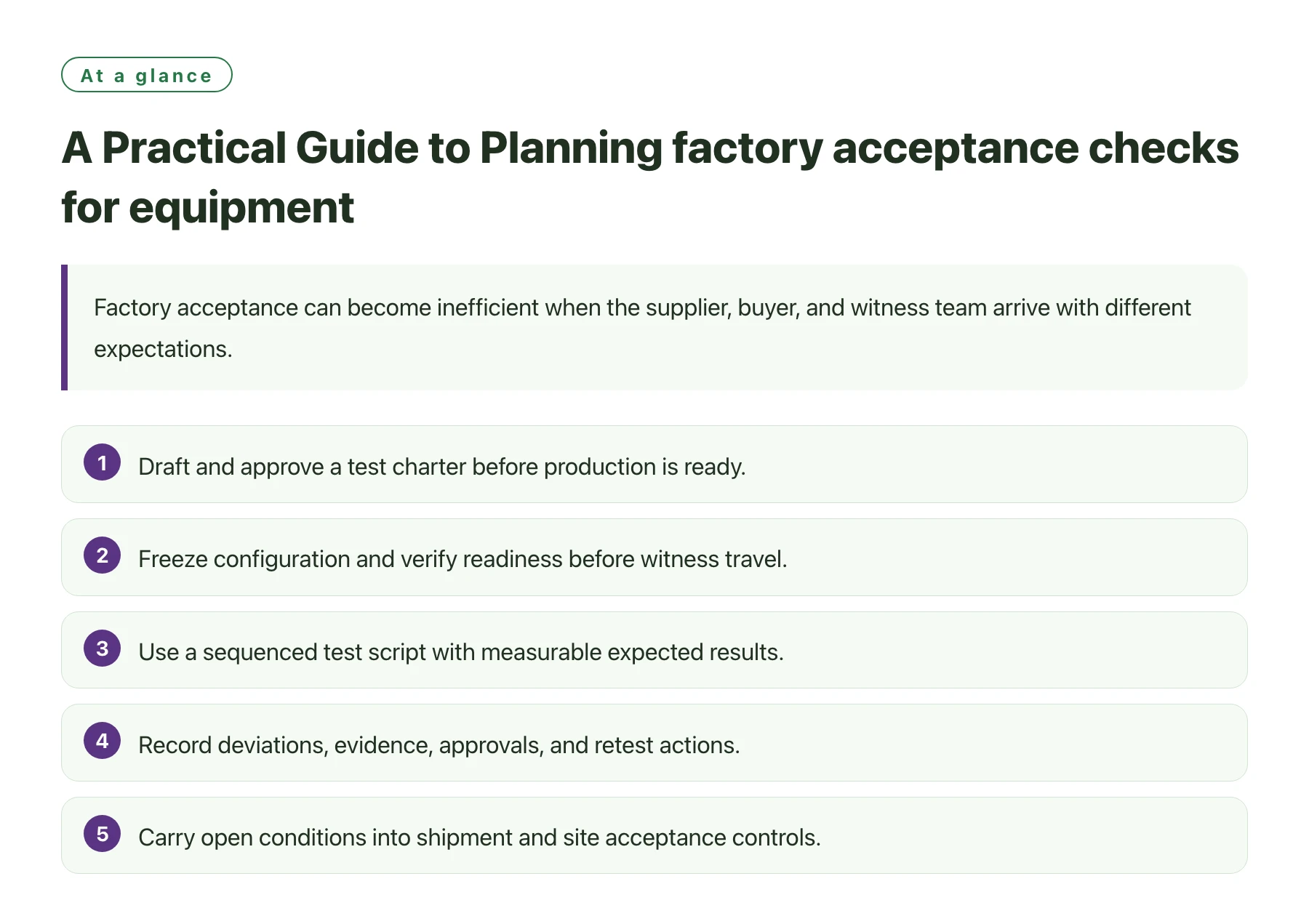
Key takeawaysDraft and approve a test charter before production is ready. · Freeze configuration and verify readiness before witness travel. · Use a sequenced test script with measurable expected results. · Record deviations, evidence, approvals, and retest actions. · Carry open conditions into shipment and site acceptance controls.
The test charter is the working plan for people, equipment, data, decisions, and timing—not only a list of checks.
1. Start with the acceptance milestone
Review the purchase order and contract to identify which payment, shipment, or project milestone depends on factory acceptance. Confirm whether the result is a recommendation, a pass/fail gate, or one element of final acceptance. Name authorized buyer and supplier signatories.
List the consequences of a pass, conditional pass, failure, or incomplete test. Set decision deadlines and escalation roles so findings do not remain unresolved after the witness team leaves.
2. Draft the test charter
The charter should state machine identity, site, configuration revision, purpose, scope, excluded tests, prerequisites, schedule, attendees, safety boundaries, test methods, acceptance limits, required data, and report format. Reference controlled drawings and software versions.
Assign each step an owner and evidence type: observation, measurement, screenshot, sample, document, or signed record. Identify who can pause a test and who approves a method change. Circulate the charter for supplier and buyer review before final scheduling.
3. Freeze configuration and test materials
Record machine model or serial, options, tooling, controllers, software, sensors, guards, accessories, and test instruments. Confirm all match the purchase order and approved drawings. List changes since the last review and decide whether additional verification is needed.
Identify test material and representative input conditions. If surrogate material is used, describe why it is suitable and what performance remains unverified. Confirm source, quantity, preparation, handling, and disposal responsibilities.
4. Conduct a readiness review before travel
Ask the supplier to confirm assembly completion, test area, utilities, safe access, operators, records, instruments, tooling, and test materials. Request evidence that the configuration is ready and the test script has been rehearsed without hiding known failures.
Use a go/no-go checklist. If prerequisites are missing, decide whether to reschedule, narrow the scope, or proceed with a documented limitation. Avoid paying for travel and witnessing before the supplier confirms the test can be performed meaningfully.
5. Sequence the test to build confidence
Begin with identity and documentation, then visual build review, utilities and interfaces, startup, normal operation, required performance runs, changeover, alarms, faults, recovery, and shutdown as applicable. Group steps to avoid unsafe or unrepresentative changes between conditions.
For each step, state starting condition, operator action, duration or cycles, expected result, measurement method, tolerance, sample size, and evidence. Link each test back to a numbered requirement so nothing important is judged from memory.
6. Include safety and operating boundaries
Set access controls, personal protective equipment, safe distance, machine isolation, and emergency communication before testing. Identify who may operate equipment and who can authorize a controlled fault or recovery scenario. Never request a safeguard bypass simply to complete a test.
ISO 12100 provides general principles for machinery risk assessment and risk reduction. Use qualified safety review to decide relevant checks and local obligations; a factory test plan does not itself establish regulatory conformity. [1]
7. Prepare the witness and recording method
Send the charter and drawings to all witnesses in advance. Confirm technical roles, interpreter, remote access, photography permission, instrument familiarity, and decision authority. Prepare a live issue log and a method to preserve original measurements and images.
If remote witnessing is used, test camera and data visibility beforehand. Identify what must be verified physically and how the supplier will demonstrate it. Remote video should not conceal control inputs, readouts, or the machine area relevant to the criterion.
8. Record deviations and retest efficiently
For each failed or unclear result, record requirement, expected value, observed result, machine state, evidence, severity, owner, and due date. Pause related steps when the issue affects safety, test validity, or downstream results.
If correction occurs, identify changed components, software, settings, or method and define a retest. Keep original and repeat results. Do not downgrade a failure informally or accept a verbal commitment as completed corrective evidence.
9. Close the test and decide shipment status
At test close, review passed steps, failed criteria, untested items, conditions, open work, and signatures. Issue a report tied to machine configuration and charter revision. Define who approves a conditional status and whether shipment is allowed under the contract.
Link the decision to packing, shipment, manuals, spare parts, and release records. If a condition must be completed at site, state the owner, due date, acceptance method, and consequence of nonclosure.
10. Carry the baseline through installation
Transfer the accepted configuration, software, settings, test data, issue log, and approved changes to the commissioning team. Define which criteria repeat at site because installation, local utilities, integration, or real product inputs differ from factory conditions.
Buyers planning industrial equipment sourcing support can use a test charter to align supplier work, witness review, shipment release, and site acceptance. Reopen the charter after changes that affect equipment identity, method, risk, interfaces, or required output.
Sources
Frequently asked questions
When should the factory test charter be approved?
Approve it before witness travel and before the supplier begins the final acceptance run.
What if the machine is not ready on the planned date?
Use agreed go/no-go criteria to reschedule, narrow scope with approval, or document the limitation.
Should every planned test be witnessed in person?
Choose attendance by risk; use remote evidence only when observation and data remain reliable.
What happens to open findings after the test?
Record owner, closure evidence, retest, shipment status, and any required site acceptance follow-up.