How Do You Evaluate a Period Underwear Manufacturer?
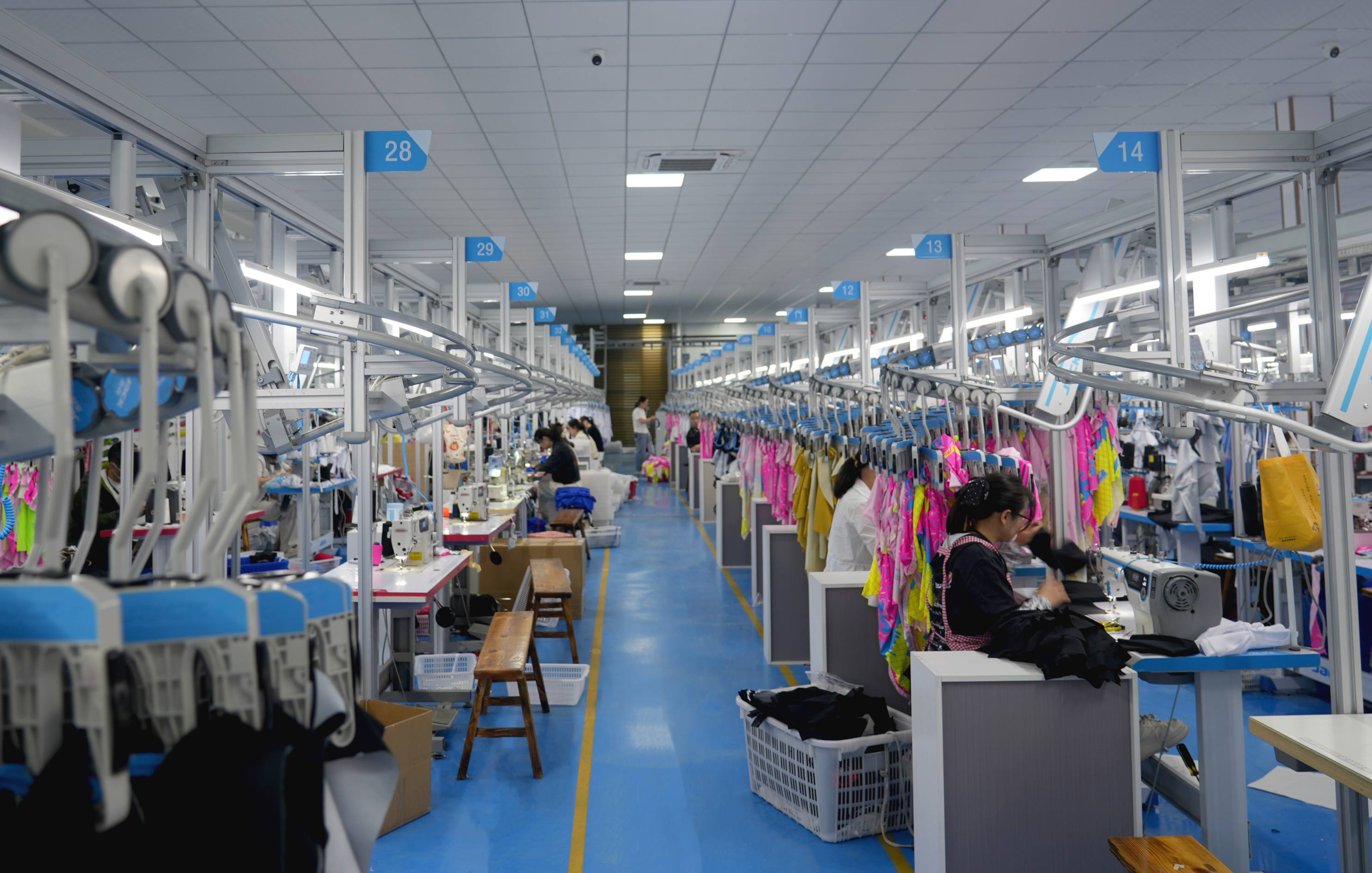
A period underwear manufacturer should be evaluated through product performance, material control, wash durability, chemical compliance, sizing consistency, production records, and commercial terms. Test at least 3 sizes and 30 finished garments rather than relying on one sales sample. Measure absorbency before washing and again after 20–50 wash cycles, inspect leakage under pressure, and compare garment dimensions against agreed tolerances such as ±2–3%. For U.S. sales, care instructions need reasonable supporting evidence under FTC rules, while California restrictions on regulated PFAS in textile articles took effect in 2025. A good factory should provide measurable specifications that can be reproduced across bulk production.
Period underwear is harder to manufacture consistently than standard briefs because several materials with different stretch, thickness, drying behavior, and sewing requirements meet inside one garment. A soft body fabric does not compensate for an absorbent section that shifts, becomes stiff after washing, or allows fluid to reach the leg opening. Begin with finished garments rather than fabric cards. Order samples in at least 3 sizes, preferably a small, middle, and large size, and buy enough pieces to compare production consistency rather than examining a single development sample.
A useful first inspection can cover 30 garments. Record waist, hip, front rise, back rise, leg opening, gusset width, protective-panel length, and finished garment weight. If 4 out of 30 pieces show noticeably different gusset placement, the issue is already large enough to discuss before a 10,000-unit order begins. At a 2% defect rate, a 10,000-piece shipment contains 200 defective units; at 0.5%, the number falls to 50. That difference affects inspection time, replacement stock, refunds, and customer service.
Measurement records should lead into the absorbent construction because a garment can meet every size measurement and still perform poorly. Ask for the specification of every layer touching the protected area, including fiber composition, fabric weight in GSM, membrane construction, laminate structure, and supplier reference. “Four-layer protection” is not a technical specification. Two suppliers can both use four layers while producing very different absorption speed, thickness, drying time, and leakage behavior.
A comparison sheet can be kept simple:
| Item to verify | Information to request | Useful production check |
|---|---|---|
| Body fabric | Fiber %, GSM, stretch | Compare 3 production lots |
| Top layer | Composition, moisture handling | Check wet-back |
| Absorbent layer | Composition, GSM, thickness | Test 10–30 garments |
| Barrier layer | Membrane type, construction | Inspect after stretching |
| Gusset | Width and protected length | Measure across 3 sizes |
| Elastic | Width, recovery specification | Stretch repeatedly |
| Finished garment | Weight and measurements | Record lot variation |
Once the material structure is known, test absorbency using the same procedure for every supplier. A factory claiming 40 mL cannot be compared fairly with one claiming 30 mL unless both figures come from the same method. Adding liquid to an isolated absorbent insert until saturation usually produces a different number from testing a finished garment under pressure. Define the liquid amount, application rate, rest time, garment position, pressure, and failure point before comparing results.
For example, take 10 finished garments from one style and divide them into test groups. Record initial dry weight, add a fixed quantity such as 20 mL or 30 mL at a controlled rate, wait for a defined period, then apply consistent pressure using the same test setup. Record visible leakage, side migration, wet-back, and final retained liquid. Repeat the same procedure after laundering rather than treating the first result as permanent performance.
A 30 mL capacity figure is useful only when the buyer knows how 30 mL was measured, whether the full garment was tested, and whether the result was repeated after washing.
Wash durability follows naturally because reusable underwear is sold for repeated use. Test a group after 1 wash, another after 10 washes, and additional samples after 20, 30, or 50 cycles when the product positioning requires longer-term performance. AATCC TM135 is an established method for evaluating dimensional change of fabrics after home laundering, while AATCC TM150 addresses garments. The factory does not need to use only one method, but it should document the procedure it uses.
After laundering, measure more than shrinkage. Check whether the laminated area develops bubbles, whether absorbent layers bunch toward one side, whether edges curl, whether the waistband loses recovery, and whether stitching opens under stretch. A 3% change in a 70 cm measurement equals 2.1 cm, enough to alter fit on a close-fitting garment. Record before-and-after dimensions instead of writing “passed washing” on a sample report.
Fit testing should then move from flat measurements to body coverage. Period underwear depends on the protected section staying in the intended position during walking, sitting, and sleeping. Compare the location of the absorbent area across at least 3 sizes rather than assuming a larger pattern automatically produces appropriate coverage. A wider hip measurement may require different gusset proportions, elastic tension, or rear protection length.
The sewing inspection should be equally specific. Stretch each leg opening and waistband several times and inspect skipped stitches, seam opening, broken threads, puckering, uneven elastic attachment, and exposed membrane edges. Turn the garment inside out and compare the left and right sides. A 5 mm construction difference may appear minor on a table yet become more visible when repeated across several layers around a narrow gusset.
Once physical construction is acceptable, review chemical documentation at component level. OEKO-TEX STANDARD 100 currently covers testing against more than 1,000 potentially harmful substances, and requirements become stricter as skin contact increases. A certificate should be checked for the certificate holder, covered article, validity, and the components included rather than accepted from a logo on a sales presentation.
PFAS documentation deserves separate attention for brands selling in California. From January 1, 2025, California law prohibits the sale of new textile articles containing regulated PFAS, with the law defining a total-organic-fluorine threshold of 100 ppm from 2025 and 50 ppm from January 1, 2027, alongside restrictions on intentionally added PFAS. The law also requires manufacturers to provide a certificate of compliance to sellers or distributors.
For that reason, ask the manufacturer whether water-repellent, stain-resistant, antimicrobial, odor-control, or other finishes are used anywhere in the garment. Request the material declaration and applicable test report rather than accepting “PFAS-free” as an email statement. If a report covers only the body fabric while the gusset contains 3 additional materials, the documentation does not represent the complete garment.
U.S. care labeling should also be reviewed before bulk approval. The FTC Care Labeling Rule, 16 CFR Part 423, requires manufacturers and importers of covered textile apparel to provide regular care instructions and have a reasonable basis for the care information. The rule has been effective in its amended form since September 1, 2000. A factory recommending “machine wash cold, hang dry” should therefore be able to explain how its product was checked under the stated care conditions.
Testing and paperwork still do not show whether a supplier can reproduce an approved sample at scale, so the next review should focus on production control. Ask which processes happen inside the factory and which are outsourced. Cutting, sewing, bonding, lamination, dyeing, printing, elastic production, and packaging may come from several facilities. Outsourcing is common; the useful question is how incoming lots are identified, inspected, approved, stored, and linked to finished orders.
Request one example of a production record with commercially sensitive information removed. A workable record should connect the purchase order with material lots, production dates, inspection results, and packed quantities. If 1,500 units later show a laminate problem, lot identification can help determine whether the same material was used across 1,500 pieces or the entire 20,000-piece production run.
Quality inspection should use numbers rather than phrases such as “100% QC.” Ask how many units are checked for measurements, appearance, construction, and functional performance, and what happens after a failed inspection. For an early order, a brand might inspect 100% of a small pilot quantity while using a defined sampling plan for later production. The appropriate method depends on order size, defect classification, previous supplier performance, and retailer requirements.
A pilot order also gives better information than a perfect sample-room garment. Sample technicians may spend 30–60 minutes on one garment, while bulk operators work to production targets. Start with a manageable quantity, record actual defect categories, and compare them with the agreed specification. If 18 major defects are found in 1,000 inspected pieces, the observed major-defect level is 1.8%; 5 defects equal 0.5%.
Commercial terms should be reviewed beside manufacturing performance rather than afterward. Compare MOQ by style, color, size, fabric, elastic, label, and packaging because a 1,000-piece garment MOQ can still require enough custom-dyed material for several thousand garments. Ask how unused material is identified, stored, and allocated to future orders.
| Commercial point | Supplier A | Supplier B | What to compare |
|---|---|---|---|
| Garment MOQ | 1,000 pcs | 2,000 pcs | MOQ by color and style |
| Sample rounds | 3 | 2 | Cost and revision accuracy |
| Bulk lead time | 35 days | 42 days | Capacity actually available |
| Major defects | 1.8% | 0.6% | Same inspection method |
| Unit price | $3.20 | $3.48 | Same material specification |
A $0.28 unit-price gap equals $2,800 on 10,000 pieces, but the cheaper quotation should not be selected until both suppliers are compared under the same specification. Extra inspection, rework, replacement units, air freight caused by late production, and returns can consume that difference quickly. Pricing becomes easier to compare after material construction, tolerance, testing, packaging, and inspection terms are fixed.
Communication can also be measured. Send the same 10 technical questions to shortlisted factories and record how many are answered completely, how long technical clarification takes, and whether revised specifications are returned with the correct version number. A supplier answering 9 of 10 questions accurately is easier to manage than one sending a faster reply that addresses only 4.
Brands comparing manufacturers such as Ljvogues with other suppliers can use the same evaluation file for every candidate: identical garment specification, identical wash procedure, identical absorbency method, identical size range, and identical inspection criteria. Supplier comparisons become more reliable when every factory is measured against the same written requirements rather than different sales claims.
Before approving a larger order, keep the final supplier file short enough to use during production: approved sample reference, bill of materials, measurement chart, tolerance table, absorbency procedure, wash procedure, chemical documents, labeling requirements, packaging specification, inspection plan, and production dates. If 12 separate documents contradict one another, production staff may follow different versions; a controlled specification with revision dates reduces that problem.
A manufacturer should therefore be able to show more than attractive samples. Ask for 30-garment consistency checks, results after 20–50 wash cycles, measurements across at least 3 sizes, component-level chemical records, current compliance documents, material-lot identification, and defect data from a pilot run. When those numbers remain consistent from development through bulk production, the supplier is easier to evaluate on repeatable manufacturing performance rather than presentation quality.